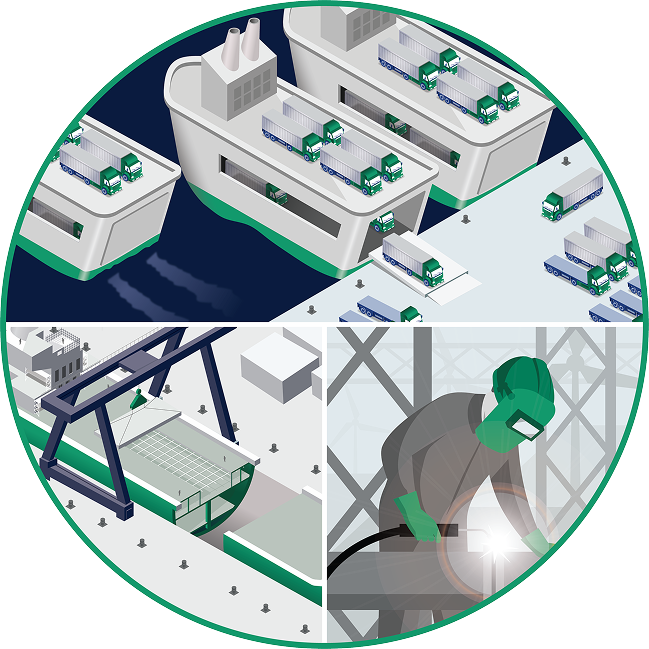
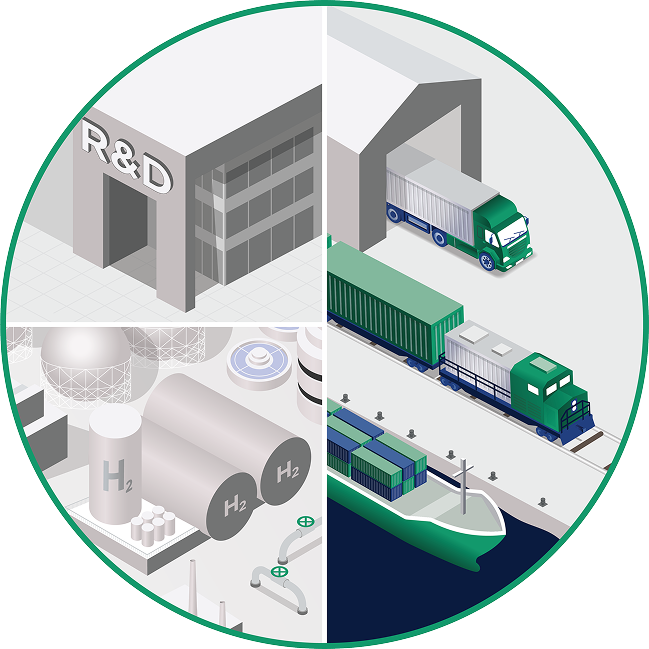
As a national and international hub for renewable energy, chemicals, alternative fuel, logistics (rail, air, shipping), shipbuilding, and high value engineering, FGF’s strategic sites – Grangemouth, Rosyth and Mid-Forth (Leith and Burntisland) – are driving progress for Scotland’s and the UK’s low-carbon economy.
To achieve our ambition, FGF is supporting innovation and economic growth while tackling emissions from industry, transport, and energy use in buildings.
In line with this, FGF have set clear targets:
- A commitment for the investment within the Forth Green Freeport tax site area to be operationally Net Zero by 2045 or earlier, in line with the Scottish Government’s target.
- Whole lifecycle carbon assessments to be completed for all investments within tax sites.
Progress is already underway, with major new investments being onboarded through the Net Zero charter. This ensures new projects are aligned with rigorous net zero standards and the region’s climate ambitions, and that expectations are clear from the outset of a project. A dedicated Net Zero Committee promotes alignment with Scottish Government objectives and encourages collaboration and shared learning.
FGF mandates best practice in whole life cycle carbon management and sustainable procurement, with developers following leading standards.
To support informed decision-making and effective carbon management across construction materials and methods used in the Freeport’s seed-funded projects, FGF have provided tools to show where carbon savings can be made. Sites are also invited to incorporate design principles that maximise energy efficiency and to examine effective waste management, alongside opportunities for low carbon transport solutions and on-site renewable energy generation. FGF also highlights the importance of supporting just transitions, planning for climate change adaptation, and taking proactive steps to enhance nature and biodiversity.
We regularly update our carbon projections, and transparent annual reporting keeps the Scottish Government and community partners informed. By focusing on key growth clusters – including alternative fuels and energy, offshore wind, and modular manufacturing – FGF will deliver substantial economic, social, and environmental benefits, creating good jobs and helping shape a sustainable future for Scotland and beyond.